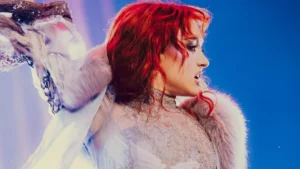

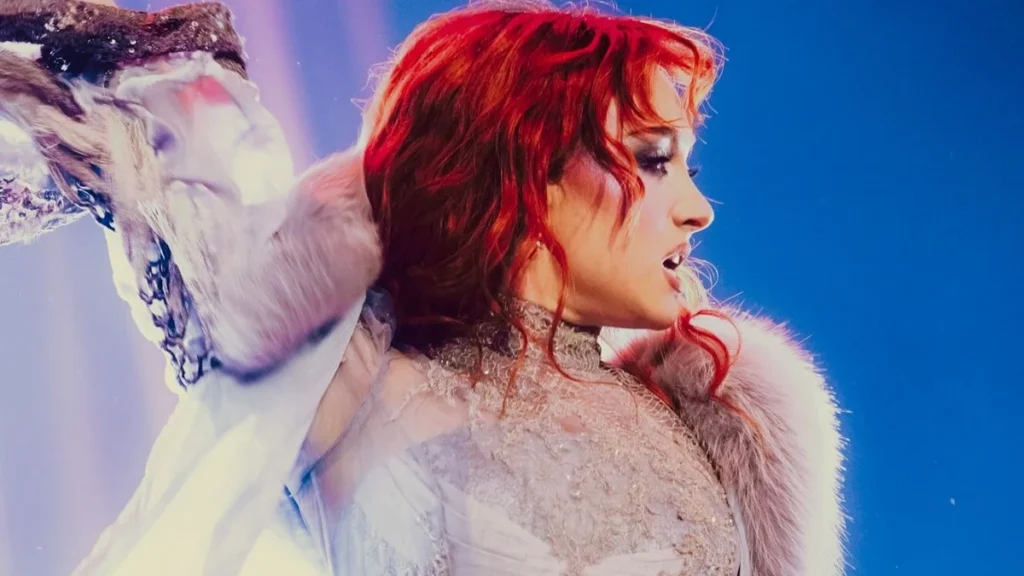
Chappell Roan at The Super Graphic Spectacular in Los Angeles. Photo: Lilly Duran / Grimy Goods
Chappell Roan has always treated the stage as a place to build a world, and in October she built one to give away. Over two nights at the Shrine Auditorium in Los Angeles, her Super Graphic Spectacular turned a pop show into a fundraiser for trans youth and LGBTQIA+ communities, with drag, comedy, guest stars and a ballroom-sized set. PinkNews, citing QNews, reports that the two nights raised $2 million.
The money goes to the Midwest Princess Project, the non-profit Roan founded in 2025 and named after her debut album, The Rise and Fall of a Midwest Princess. The Spectacular marked the project’s first anniversary, and all net proceeds are set to fund what comes next. Here is how the event worked, who took the stage, and why the community around Roan made it more than a concert.
What the Midwest Princess Project Does
The project exists to move money from Roan’s audience to the organisations doing the daily work. According to PinkNews, it supports groups working to make life safer, healthier and happier for LGBTQIA+ people, with a particular focus on trans youth. In its first year it raised more than $800,000, through donations and proceeds from Roan’s Visions of Damsels and Other Dangerous Things pop-up shows, as Variety reported when the Spectacular was announced.
That first year reached a long list of groups. Grimy Goods, reviewing the opening night, reports that the project supported more than 60 organisations in its first twelve months. When the event was announced, the organisers said every dollar raised in Los Angeles would go directly to the project’s ongoing work on care, connection and access to resources, according to Variety and Billboard.
The event also brought Chappell Roan back to a stage of her own. Variety notes that she had largely stayed out of the spotlight after her Grammy Awards appearance in February, with her Visions of Damsels and Other Dangerous Things tour closing in São Paulo in March.
A Fan-First Way to Get a Ticket
The ticketing was designed with the community in mind. Billboard reported that the Spectacular used AXS’s Fair AXS system, a fan-first approach meant to keep the process fair and transparent and to keep scalpers and bots out. Fans pre-registered between 7 and 11 August, and everyone who registered in that window could buy a ticket, according to Variety, with sales opening in waves from 18 to 20 August.
The organisers described the event as a way to bring artists, fans, drag performers, comedians and advocates together around queer joy, visibility and collective action. Each night promised live performances, guest appearances, drag artistry and comedy, along with volunteer opportunities to benefit trans youth and LGBTQ+ communities.
Inside the First Night at the Shrine
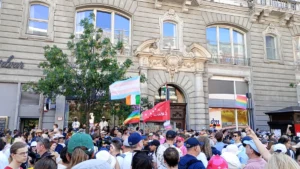
The evening began before anyone took a seat. Grimy Goods describes a pre-show Super Graphic Block Party that brought local vendors and community organisations into the festivities, with chances to volunteer and get involved, so that the connections made on the night did not have to end when the show did.
Inside, the comedian Caleb Hearon hosted. In one charity trivia segment, he promised a donation for every correct answer from Amanda Lepore. She managed one, and the full amount was pledged anyway, before she performed “Champagne”. The drag performer Kyra Jeté brought voguing-inflected movement, and the aerialist Blaine Petrovia added acrobatics to a variety-show format that gave drag, dance and comedy equal billing with the music.
Lola Young, who had arrived from overseas the day before, played a three-song set that included “Messy” and spoke about why showing up for LGBTQ+ representation mattered to her. Tinashe followed with a short, sleek dance-pop set and thanked Roan for bringing everyone together. Between the acts, Hearon kept the purpose in view, acknowledging the pressures facing immigrant and trans communities and the importance of visibility and solidarity.
Christina Aguilera Changed One Word in Beautiful
The biggest reaction of the night came from a surprise guest. Christina Aguilera walked out, thanked the queer community for supporting her throughout her career and sang “Beautiful”, a song long embraced by LGBTQ+ audiences. According to Grimy Goods, she shifted the lyric from I and me to we and us, turning a personal affirmation into a collective one, and the room sang along.
Aguilera then joined Roan for a duet of “Coffee”, which she called her favourite of Roan’s songs. Roan also performed the newly released remix of Olivia Rodrigo’s “expectations” for the first time live, singing both parts herself after explaining that Rodrigo could not be there.
Chappell Roan’s own set, delivered in a shimmering silver-blue corseted gown, ran through “Super Graphic Ultra Modern Girl”, “Femininomenon”, “After Midnight”, “Casual”, “HOT TO GO!”, “Red Wine Supernova”, “The Subway” and “Pink Pony Club”. Grimy Goods describes a performance that felt unguarded, with Roan laughing through the occasional imperfect vocal and letting the night be a little messy, while the theatre seats went largely unused.
Why the Community Made It More Than a Concert
Grimy Goods framed the Spectacular as a glimpse of what happens when spectacle meets community organising. “Not every act of resistance arrives carrying a protest sign,” Jeanette Diaz wrote, describing a theatre full of platforms, rhinestones and pink cowboy hats. At a time when trans people and the wider community are watching their rights, resources and spaces come under pressure, all that extravagance read as an assertion of how much space queer joy deserves.
The review also makes a sharper point. Pop stardom brings crowds, headlines and money, and Roan pointed those resources at organisations that rarely get that kind of spotlight. It is not a cure for the systems that put the community at risk, but it shows what a pop spectacle can do when it is built to give rather than only to sell. The block party, the volunteering and the trivia pledges all pushed in the same direction: from the audience to the people doing the work.
That connects to a wider shift in how queer people are living. As we reported, one in three LGBTQ+ adults say they are more out than two years ago, and gatherings like this one are part of how the scene celebrates that visibility.
What Comes Next for the Project
PinkNews reports that all net proceeds from the two nights are going towards the Midwest Princess Project’s next chapter. With more than $800,000 raised in its first year and a reported $2 million from the Spectacular, the project now has far more to give than it did a year ago, and a proven model for raising it: a show the community wants to attend, ticketed to reach real fans, with organisations invited in rather than thanked from the stage.
Chappell Roan’s chart power makes that model hard to ignore. Billboard notes that she has landed nine songs on the Hot 100, and that The Rise and Fall of a Midwest Princess peaked at No. 2 on the Billboard 200. This year she also played Olivia Rodrigo’s all-women Daisy Chain Fields festival, which supports charities for women and girls.
For the QueerPeople.News desk, the takeaway is simple: “The Super Graphic Spectacular showed what chosen family looks like on a grand stage, with the community both on stage and in the room, and the money going where it is needed.” The organisations funded in the project’s second year will be the real measure of these two nights.
About The Author