
Seven. That is how many trans characters GLAAD found across every scripted primetime series on American broadcast, cable and streaming television over the past year, and none of them is coming back. Six are women and one is a man, and by the time the next television season settles in, all seven will be gone from the screen.
The figure comes from GLAAD’s 21st Where We Are on TV report, released this week as the community marks Trans Awareness Week. It sits inside a wider fall: the report counted 369 LGBTQ+ characters in total, 120 fewer than a year earlier, even as some of the most talked-about shows on television put queer stories at their centre.
What GLAAD Counted This Year
The report tracks LGBTQ+ characters on scripted primetime broadcast, cable and streaming original series that aired a new season between 1 June 2025 and 31 May 2026. Across that window, GLAAD counted 369 LGBTQ+ characters. The previous edition counted 489, so the drop is 120 characters, or 25%.
The study, supported this year by Skittles, a division of Mars, is published every year. GLAAD uses it both to measure who is visible and to make the case to studios and streamers that inclusion is good business. That second argument runs through this year’s findings, because the decline arrives at the same moment queer-led series are breaking audience records.
Of the 369 characters, 141, or 38%, will not return, according to GLAAD, because their series were cancelled or ended, were limited series by design, or because the character died or left the show. That churn matters: a character who disappears after one season leaves little trace in the culture, while the ones who stay for years are the ones viewers grow up with.
Seven Trans Characters, and None of Them Coming Back
The steepest fall is in trans representation. GLAAD found seven trans characters, 2% of the total, down from 33 a year earlier, a 79% decline as The Hill calculated it. GLAAD says none of the seven will return in the coming season.
Nick Adams, vice president of the GLAAD Media Institute, put the trend in context. “Since the record high of 42 transgender characters in the 2021-2022 report, this study has seen a year-over-year decline in the number of transgender characters on television,” he said in GLAAD’s release. “Now we see no transgender characters on television.”
He tied the absence to the world outside the studio. “Authentic trans characters on television can show audiences that transgender people are their friends, co-workers, family, and neighbors,” Adams said. “And yet, at a time when those stories are needed most, TV executives have turned away.”
For trans viewers, the numbers describe something felt rather than counted. Seeing yourself on screen, in a role that is more than a punchline or a plot device, is one of the ways a community finds its footing, and for younger trans people it can be the first sign that a full life is possible. Four years ago there were 42 such characters. Next season, on GLAAD’s count, there will be none.
Who Else Is Disappearing From the Screen
Trans characters are not the only group losing ground. Queer characters fell by 50%, gay characters by 32%, lesbian characters by 14% and bisexual characters by 5%, The Hill reported from the study. Nonbinary characters were the one group to grow, rising by 33%.
Representation of LGBTQ+ characters of colour also fell. GLAAD counted 161 characters of colour among the 369, or 44%, down from 51% the previous year and the lowest share in eight years. There were no characters living with HIV at all. The totals for broadcast and cable television separately reached a 12-year low and a 16-year low, according to The Hill.
Taken together, the report describes a television landscape that has narrowed on almost every axis at once. The characters who remain are fewer, less diverse and, in the case of trans women and men, about to vanish entirely.
The Hits That Prove Audiences Want These Stories
The paradox at the heart of the report is that queer stories are among television’s biggest successes. GLAAD points to Heated Rivalry, which it says became HBO Max’s most-watched acquired scripted series ever, peaking at 52 times average demand. As PinkNews notes, the series follows two closeted hockey players navigating a secret romance.
Apple TV’s Pluribus became the platform’s most-watched original series in the US, with 50 times average viewer demand, six Emmy Awards and a 99% score on Rotten Tomatoes, according to GLAAD. On Netflix, The Hunting Wives doubled its viewership in its second week, topped the platform’s charts and was renewed for a second and third season. Stranger Things and Hazbin Hotel were the two most in-demand series of the research period, at 174 and 73 times average demand, and PinkNews notes that Stranger Things’ Will Byers came out as gay in the fifth season.
Those are not niche successes. They are some of the most watched and discussed shows of the year, and GLAAD presents them as proof that LGBTQ-inclusive series draw large audiences.
Why GLAAD Calls the Cuts a Bad Business Decision
GLAAD’s president and CEO, Sarah Kate Ellis, framed the decline as a commercial mistake as well as a cultural one. “Hollywood is slashing LGBTQ stories and characters even while demand is increasing,” she said. “It’s a bad business decision and one of the drivers turning audiences away from traditional TV and streaming platforms.”
She pointed to the year’s hits as proof. “With the wild success of Heated Rivalry, Pluribus, The Hunting Wives, Stranger Things, and more, the message from viewers could not be more clear: authentic representation is television’s most powerful growth engine,” Ellis said.
The audience data GLAAD cites backs that up. Drawing on MRI-Simmons research from 2026, the report says more than half of Gen Z want to see LGBTQ+ representation on television, that nearly a quarter of Gen Z identify as LGBTQ+, and that Gen Z viewers are 61% more likely than other generations to talk about TV shows on social media. A generation that shares what it watches, and that sees itself in these stories, is a costly audience to lose.
What the Report Means During Trans Awareness Week
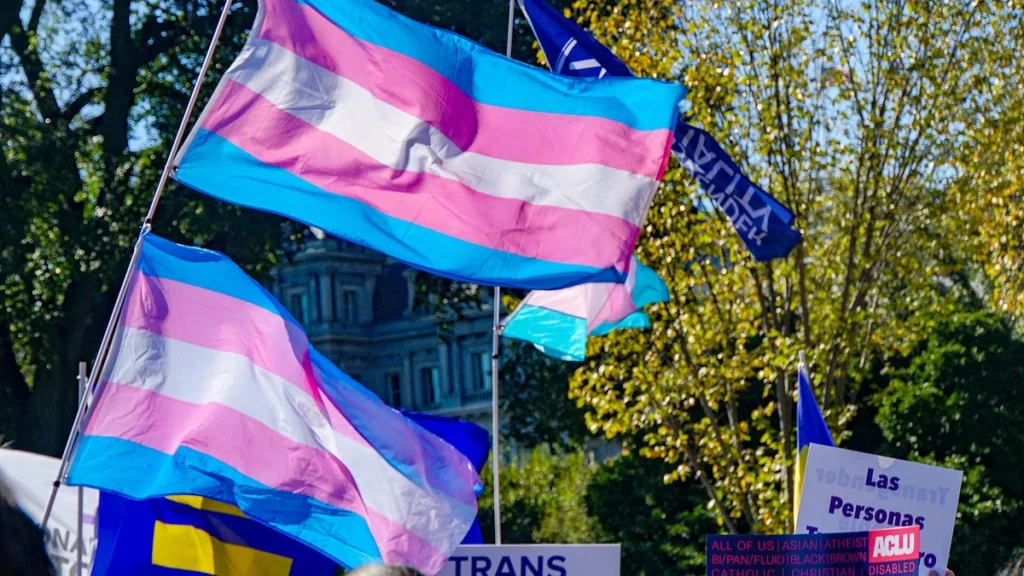
The timing gives the findings extra weight. Trans Awareness Week began on 13 November and leads into Trans Day of Remembrance on 20 November, which honours trans people who have lost their lives to violence, as Out In Jersey notes in its guide to the week’s events. In New Jersey alone, Garden State Equality has lined up workshops, panels and celebrations for trans people by trans people.
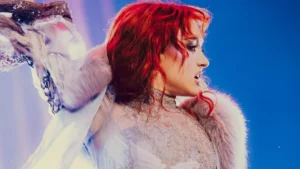
Visibility has always come from more than one place. Musicians, writers and activists continue to make space where television has stepped back, and fans have shown how much that matters, as when Chappell Roan raised $2 million for trans youth in two nights. Support of that kind, from the scene and from chosen family, does not replace screen representation, but it shows the appetite for trans stories is not shrinking.
For viewers who want to see more, the most direct signals are the ones the industry already measures: watching, sharing and talking about the shows that include trans and queer characters, and the creators who make them.
What Comes Next for Queer Television
GLAAD says it will keep working with the industry as a partner, consulting on content, spotlighting promising projects and creators, and holding studios to account for stories that reflect the diversity of the LGBTQ+ community. Its message to executives is simple: the audience is there, and the hits prove it.
Whether the next report shows a recovery will depend on decisions being made now, in writers’ rooms and at greenlight meetings. The Hunting Wives already has two more seasons on the way. The question GLAAD’s numbers leave hanging is whether any trans character will be among the new faces when the cameras roll, or whether television will keep turning away from a community that is asking, more loudly than ever, to be seen.
About The Author