
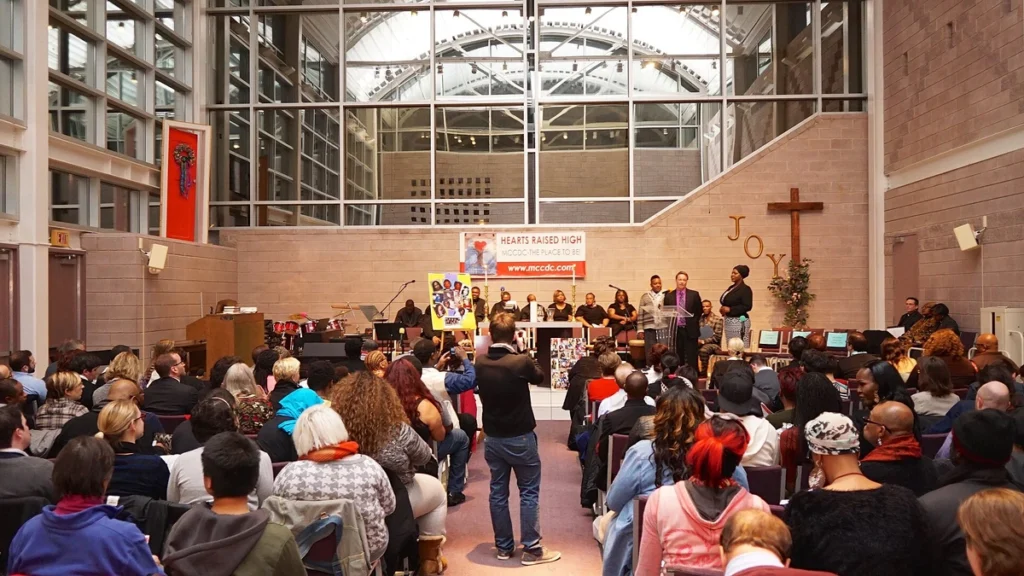
A Trans Day of Remembrance vigil in Washington, DC, in 2014
On Friday 20 November, vigils around the world will read aloud the names of trans people killed in the past year. This year the community gathers for Trans Day of Remembrance a little over a week after TGEU’s Trans Murder Monitoring 2026 recorded 273 trans and gender diverse people reported murdered worldwide between 1 October 2025 and 30 September 2026. On average, that is one murder reported every 32 hours.
The total is lower than the 281 recorded the year before and the 350 the year before that. TGEU, the Trans Europe and Central Asia network, says the violence has not eased. The project counts only reported murders, and the organisation says monitoring is getting harder: shrinking civic space, hostility from media and states, and cuts to funding all make it less likely that a murder is reported and recorded at all.
Where Trans Day of Remembrance Began
The day grew out of a killing that remains unsolved. Rita Hester, a Black trans woman, was killed in her apartment in the Allston neighbourhood of Boston on 28 November 1998, and the Boston Police Department still lists her case among the city’s unsolved homicides from that year, Gayety reported. Boston had already lost Chanelle Pickett, a 23-year-old trans woman killed in 1995, whose accused killer was acquitted of murder after a so-called trans panic defence, according to the Boston City Council.
Gwendolyn Ann Smith, a trans woman in San Francisco, responded by building a web memorial called Remembering Our Dead, and she started Trans Day of Remembrance in 1999, according to GLAAD as cited by Gayety. The first vigils took place that year in San Francisco’s Castro district and in Boston. “Transgender Day of Remembrance seeks to highlight the losses we face due to anti-transgender bigotry and violence,” Smith said in a statement that GLAAD publishes on its TDOR page, as quoted by Gayety.
The format has stayed close to that first gathering. Many events are candlelight vigils, usually hosted by local trans advocates or LGBTQ+ groups in community centres, parks and places of worship, and GLAAD says a vigil often includes a reading of the names of those lost that year, Gayety reported. The day closes Transgender Awareness Week, which ran from 13 to 19 November. TGEU, which keeps its own Trans Day of Remembrance page, publishes a printable list of this year’s names for vigil organisers alongside its report.
273 Names in Twelve Months
TGEU publishes its Trans Murder Monitoring update every year in the lead-up to Trans Awareness Week. The 2026 edition found reported murders in 35 countries, the second-highest number since the project began. Only 2024, with 38, was higher, and this was the first year murders were reported in Romania and Cameroon. Since data collection began in 2009, the project has recorded more than 5,500 murders worldwide.
The people on this year’s list look much like those on previous ones. Almost all of the victims, 95 per cent, were trans women or transfeminine people, which is why TGEU describes these killings as feminicides. One in three, 32 per cent, were sex workers, still the most targeted group among victims whose occupation was known. Three in four were Black or Brown trans people.
The age profile appears to be shifting slightly older. More than a third of victims, 35 per cent, were aged between 31 and 40, while 21 per cent were aged 19 to 25, the group that was consistently the largest in the project’s first decade. One in twenty victims, five per cent, were under 18.
Where the Murders Were Reported
Seven in ten of the year’s reported murders, 69 per cent, took place in Latin America and the Caribbean, and Brazil alone accounted for 32 per cent of the global total. Within the region, the trends point in different directions. Mexico recorded 29 murders, its lowest figure since 2011, while Argentina reached its highest total ever with 16 and Ecuador recorded 16, its second highest.
TGEU cautions that the figures are raw counts, not adjusted for population, so they show where murders are reported rather than where a trans person is at greatest risk. Latin America has a long-established movement of trans and feminist organisations that monitor and report feminicides, which means more of the region’s killings reach the record. A lower national figure is not proof of a safer country either. “We must not show any signs of celebration [over the decline in recorded murders]; rather, we must scrutinise current trends, including those in each individual country,” said Rocío Suárez of Centro de Apoyo a las Identidades Trans A.C. in Mexico, one of the project’s monitoring partners, as quoted by TGEU.
Elsewhere, Asia recorded 32 murders, down from an all-time high of 51 the year before, though TGEU believes this is likely an undercount because some monitoring partners in the region reported having no capacity to provide data, citing a lack of resources and even electricity. Europe recorded 13, as many as in 2024 and 2025 combined, and most of those victims were international migrants. The United States accounted for 29, a similar level to the 31 recorded in 2025. No murders were reported from Central Asia, which TGEU says should not be read as an absence of violence. It more likely reflects a lack of safety for trans people in the region, who are forced to remain as invisible as possible.
Who Was Responsible, and How Few Were Arrested
Two in five of the reported murders, 40 per cent, were shootings, and almost a quarter, 24 per cent, were stabbings. Three in ten happened on the street, and a quarter took place in the victim’s own home.
Where a perpetrator was known, a current or former partner, lover or spouse was the most commonly reported, followed by organised hate groups and gangs at 15 per cent and strangers at 14 per cent. In 12 per cent of cases with a known perpetrator, the person responsible was a member of the police, military or army: 13 murders, up from five the year before. Nine trans people were murdered or died in suspicious circumstances in prisons or police stations, compared with four the previous year. Sex work clients accounted for eight per cent.
Justice was rare. Where local authorities documented a response, a perpetrator was arrested in only 21 per cent of cases. TGEU says many murders of trans people are not investigated at all, while others are investigated without urgency or are not recorded for what they are, and that for families and communities the absence of justice can become another loss.
Flowers on the Liffey and Vigils Across Ireland
In Ireland, GCN has listed several events for the day. TGEU’s reasoning for its work was shared there too: “We document these murders because violence against trans people is way too often underreported, overlooked and left without accountability,” the network said in a social media post quoted by GCN.
In Dublin, the Outhouse LGBTQ+ centre is holding a collective walk at 3:30pm, starting from its home on Capel Street and moving towards the River Liffey. Queer artist and musician Sexy Tadhg will lead the walk wearing a floral garland in the trans colours, designed by Adonis Flowers and Gifts. “Along the way, we’ll carry individual flowers in the colours of the trans flag. At the river, we’ll come together to offer our flowers, with words of reflection and a moment of solidarity, in memory of those we’ve lost to anti-trans violence,” Outhouse cultural programmer Naoise Roo Callan said, as quoted by GCN.
Trans Pride Cork is marking the day with LINQ Ireland from 5pm to 8pm at the LINQ community centre on 11A White Street in Cork. Back in Dublin, Trans and Intersex Pride Dublin is organising a protest with speeches and chants outside Dáil Éireann at 5:30pm, and is encouraging people to attend the annual ceremony afterwards. To close the day, Transgender Equality Network Ireland (TENI) is holding its annual service at the Unitarian Church at 6:30pm.
What TGEU Is Asking Governments to Do
Alongside the figures, TGEU set out a list of demands for governments and institutions. It wants laws and policies that criminalise or restrict trans identities, legal gender recognition and trans-specific healthcare to be repealed, and the criminalisation of sex work to end in full, with labour rights and protections guaranteed for trans and gender diverse sex workers.
The network also calls for hate crime and anti-discrimination laws that explicitly protect trans people, prison placement decisions based on self-determination, and support for trans human rights defenders and community organisations so they can keep working without fear. It asks for professionals, including police forces, to be trained to respond to anti-trans violence, with particular attention to Black trans women and sex workers, and for EU countries to implement the bloc’s directive on combating violence against women and domestic violence in a way that fully includes trans people.
Remembering the People Behind the Count
TGEU’s own map and case library cover reported murders since 2008, and its report is careful about what the numbers can and cannot show. The fall in the global total arrives at the same time as warnings from its partners about missing data, which is why the network treats the figure as a floor rather than a full picture. The organisation uses the word feminicide, coined by Marcela Lagarde in Latin America, because it points to state responsibility and to failures of prevention, protection and accountability.
For the community, though, Trans Day of Remembrance has always been about the people rather than the statistics: friends, partners, chosen family and neighbours whose names are spoken at vigils from Boston to Dublin. Visibility is a year-round question, and on screen it is shrinking: GLAAD recently found that none of TV’s seven trans characters will return next season.
Trans Day of Remembrance takes place on Friday 20 November. TGEU’s full report, including its namelist for vigils, summary tables and a global map of reported murders, is available on its website for anyone organising or attending a gathering.
About The Author