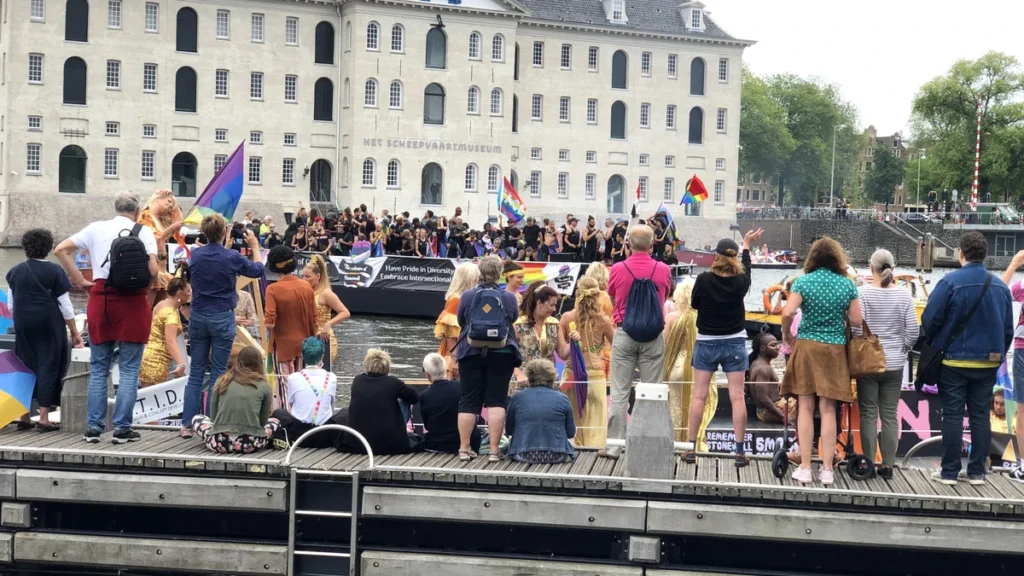
The Amsterdam Pride Canal Parade passes the Scheepvaartmuseum; the city hosts WorldPride for the first time in 2026.
For the first time in its history, Amsterdam is hosting WorldPride, and it is turning the summer of 2026 into one of the biggest LGBTQ+ celebrations the city has ever staged. WorldPride Amsterdam 2026 runs from 25 July to 8 August, two weeks of marches, canal parties, art and debate under a single theme: UNITY. It arrives in a year loaded with meaning, as the Netherlands marks 25 years since it became the first country in the world to open marriage to same-sex couples.
Whether you are planning to be there or following from afar, here is what WorldPride Amsterdam 2026 actually is, what to see, and why this particular edition carries so much weight.
What WorldPride Is, and Why Amsterdam
WorldPride is not simply a bigger Pride. Licensed by InterPride to a different host roughly every two years, it pairs the parades and festivals of an ordinary Pride with an international human-rights programme, and it travels the globe to put a spotlight on LGBTQ+ communities wherever it lands. Since the first edition in Rome in 2000, it has been held in Jerusalem, London, Toronto, Madrid, New York for the 50th anniversary of Stonewall in 2019, Copenhagen and Malmo, Sydney in 2023 and Washington, D.C. in 2025. Amsterdam takes the baton for 2026, with Cape Town set to become the first African host in 2028. Those editions have grown into some of the largest LGBTQ+ gatherings on record: the 2019 New York edition alone drew millions onto the streets to mark half a century since the Stonewall uprising, and Sydney closed its 2023 festival with a march across the Harbour Bridge.
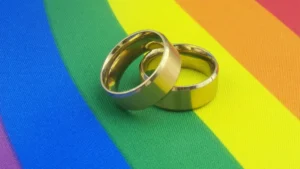
Amsterdam did not land the honour by accident. The Netherlands became the first country on earth to legalise same-sex marriage on 1 April 2001, and the city is home to COC Netherlands, founded in 1946 and now one of the oldest continuously operating LGBTQ+ organisations in the world. This edition folds several milestones into one summer: 25 years of marriage equality, 30 years of Pride Amsterdam, 80 years of COC, and 55 years since the country scrapped article 248bis, the law that once set a higher age of consent for same-sex relationships.
The Dates and the Shape of Two Weeks
The festival stretches across two weekends and everything in between, from 25 July to 8 August. The official programme splits roughly into two acts. The first week opens the celebration and builds to the world-famous Canal Parade; the second week shifts the centre of gravity to Museumplein for the WorldPride Village, the human-rights conference and the closing weekend. An Arts and Culture strand runs the entire fortnight, with a Pride Art Route threading exhibitions and installations through the city, so there is something on every single day. Amsterdam is bracing for visitors from around the world, and canal-side vantage points and hotel rooms book up fast, so early planning pays off.
The Canal Parade and the Headline Events
Opening day, Saturday 25 July, belongs to the Pride Walk, a free march from the Dam to Vondelpark that sets the tone, followed by Pride Park in Vondelpark. The single most iconic moment comes a week later: the Canal Parade on Saturday 1 August, when decorated boats glide along the Nieuwe Herengracht, the Amstel and the Prinsengracht while hundreds of thousands watch from the quays and bridges. It is free, it is unmistakably Amsterdam, and, as the only major Pride parade in the world staged on water rather than in the streets, it is the image most of the world will see.
Around those anchors sit street parties across a dozen city-centre locations on 31 July and 1 August, a Senior Pride Concert on the Nieuwmarkt, an Open Air Film Festival at Mercatorplein, and a grand finale party on the Dam on 2 August. The dance calendar opens even earlier, with the Milkshake Festival taking over Westerpark on 25 and 26 July. The second week brings the ticketed UNITY Concert on 4 August, a Wedding Party XXL on 6 August, and a closing double-header on Saturday 8 August: the WorldPride March from Martin Luther Kingpark to Museumplein, then the Closing Concert. Most of the programme is free to attend; the concerts, the conference and the wedding party are ticketed.
More Than a Party: The Human Rights Conference
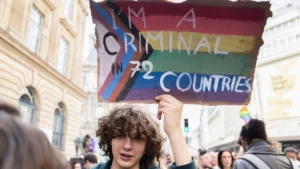
What separates WorldPride from a city Pride is the advocacy at its core. From 5 to 7 August, a Human Rights Conference takes over the Beurs van Berlage, gathering activists, policymakers and organisations to talk strategy at a moment the organisers describe bluntly: in many countries, rights that were already won are now under threat. That framing is the whole point of the UNITY theme, which the festival defines as tolerance, connectedness and love, arguing that unity is the key to combating intolerance. For a global movement watching rollbacks on trans healthcare, marriage and free expression in several countries, an international gathering in the city that legalised marriage first is far more than symbolic. Delegates are expected from Pride organisations and NGOs across dozens of countries, many travelling from places where simply marching remains dangerous or illegal, so the fortnight tries to hold both registers at once: a street party the whole city can join, and a serious global conversation about where the movement goes next.
The Anniversaries Amsterdam Is Marking
It is worth sitting with the numbers, because they are the reason this WorldPride Amsterdam 2026 feels different from an ordinary Pride. Twenty-five years ago, couples married in Amsterdam minutes after midnight on 1 April 2001, and a right now recognised in more than thirty countries began in this one. The same summer marks 80 years of COC, 30 years of Pride Amsterdam, 20 years of Workplace Pride and 15 years of the Declaration of Amsterdam on LGBTQ+ workplace inclusion. Put together, they turn the fortnight into a living timeline of how far the movement has travelled, and a quiet reminder of how recent much of that progress really is. For younger visitors those dates can read like ancient history; for the couples who married that April, they are a single lifetime.
How to Experience It, Wherever You Are
If you are travelling in, build the trip around 1 August for the Canal Parade and the closing weekend of 5 to 8 August for the Village and the March, and expect the city to be busy and jubilant throughout; Amsterdam’s official visitor platform, I amsterdam, is tracking the full calendar. Most events cost nothing to attend, which keeps the festival open to everyone; the ticketed exceptions are the UNITY and Closing Concerts, the Human Rights Conference and the Wedding Party XXL. That wedding party on 6 August nods directly to the milestone at the festival’s heart, turning Museumplein into a celebration of the marriages the Netherlands made possible first. Even the visual identity carries the message, a kaleidoscope that weaves in patterns from the Netherlands, the Caribbean Netherlands, Indonesia, Morocco and Turkey to reflect the diaspora that makes up modern queer Amsterdam. Pride has always been as much about culture as celebration, something you can see in the way ballroom culture keeps reshaping pop and fashion. For two weeks this summer, that culture has a world stage, and it is in Amsterdam.
About The Author