
Queer literature is having a landmark year. In 2026 there are more LGBTQ+ books, more publishers championing them and more readers finding them than at almost any point in the genre’s history. Award shortlists have never been deeper, summer reading lists have never been queerer, and the range of stories on offer, from historical epics to messy romance to trans memoir, has never been wider. If you have wanted a way into contemporary queer writing, this is the year to start.
Here is a guide to the books, authors and prizes defining queer literature in 2026, and where to begin if you want to read along.
The 2026 Lambda Literary Awards
The clearest snapshot of the year arrived in June, when the 38th annual Lambda Literary Awards were handed out at Sony Hall in New York. Known affectionately as the Lammys, they drew winners from more than 1,300 submissions across over 300 publishers, judged by a panel of some 80 literary professionals. It remains the most comprehensive celebration of LGBTQ+ writing anywhere.
The 2026 winners map the breadth of the field. Kat Dunn took Lesbian Fiction for Hungerstone, Charlie Porter won Gay Fiction for Nova Scotia House, and Milo Todd claimed Transgender Fiction for The Lilac People. Demree McGhee won Bisexual Fiction for Sympathy for Wild Girls, Jennifer Finney Boylan took Transgender Nonfiction for Cleavage, and Mike Curato’s Gaysians won in comics. The photography anthology Queer Lens: A History of Photography rounded out a list that spanned fiction, memoir, poetry and art.
The Literary Fiction Everyone’s Talking About
Beyond the prizes, 2026 has delivered a run of literary fiction that critics have queued up to praise. Booker Prize winner Douglas Stuart returns with a new novel about a young man drawn back to the remote Outer Hebrides island where he grew up, trading the Glasgow of his earlier work for windswept isolation. Rasheed Newson’s There’s Only One Sin in Hollywood is a dazzling historical novel set in the Golden Age of film, following a rising Black actor and the studio fixer paid to keep him closeted, a story about ambition, secrecy and the price of the spotlight.
These sit alongside sharp new work from established names like Steven Rowley, whose latest is being called his most incisive yet. What unites them is confidence: these are not coming-out stories told for a straight audience, but fully realised novels that happen to centre queer lives, and they are landing on the front tables of bookshops rather than a back shelf.
Romance, YA and Graphic Novels
Queer publishing in 2026 is not only literary heavyweights. Romance is thriving, led by Alexis Hall’s Father Material, which brings back fan favourites Luc and Oliver for the next chapter of their relationship, and Edward Schmit’s The Open Era, a sports romance about the first openly gay man to compete at a tennis Grand Slam. Young adult and graphic novels are just as strong: Tillie Walden’s Charity and Sylvia retells the true story of a lesbian couple who lived openly in 19th-century Vermont, while Alice Oseman’s Heartstopper reaches its sixth and final volume, closing a series that helped a generation see itself. Readers who followed the show’s on-screen farewell will find the books just as tender.
The breadth is the real story. In a single 2026 season a reader can pick up a queer romantasy that doubles as an official Dungeons & Dragons novel, a novel-in-verse about a nonbinary teenager coming out in London, and a burnt-out campus story about a young climate activist that is as funny as it is heartfelt. Outlets that track the genre closely, from Book Riot to specialist newsletters and bookshop staff picks, now publish monthly round-ups just to keep up, and still miss titles. A decade ago a queer reader might have hunted for the one representative book of the year; in 2026 the harder task is choosing between the dozens released in the same month.
New Voices Widening the Field
Some of the year’s most exciting writing is coming from debut and genre-bending authors who are stretching what queer literature can do. Novels in verse, romantasy and speculative fiction are all being used to tell LGBTQ+ stories, from nonbinary coming-of-age tales set in London to fantasy adventures where queerness is simply part of the world rather than its central conflict. Publishers that once treated queer titles as a niche are now building whole seasons around them, and independent bookshops and online communities are doing the work of connecting these books to the readers who need them.
That range matters. A teenager looking for a first crush story, a reader who wants a knotty literary novel and someone hunting for trans history on the page can all be served in the same year, by the same shelf. Breadth like this is new, and it is a sign of a genre that has moved from the margins to the mainstream.
Why Queer Literature Matters More Than Ever
The boom is not happening in a vacuum. Around the world, LGBTQ+ books remain among the most challenged and banned titles in schools and libraries, and trans stories in particular are being written against a backdrop of legislative pressure. That context gives the year’s output a quiet urgency: every openly queer novel that reaches a bestseller list, and every trans memoir that wins a major award, is both an artwork and a small act of visibility. Crucially, much of 2026’s writing refuses to be defined by hardship alone, insisting on queer joy, humour and ordinary life as subjects worth a whole book.
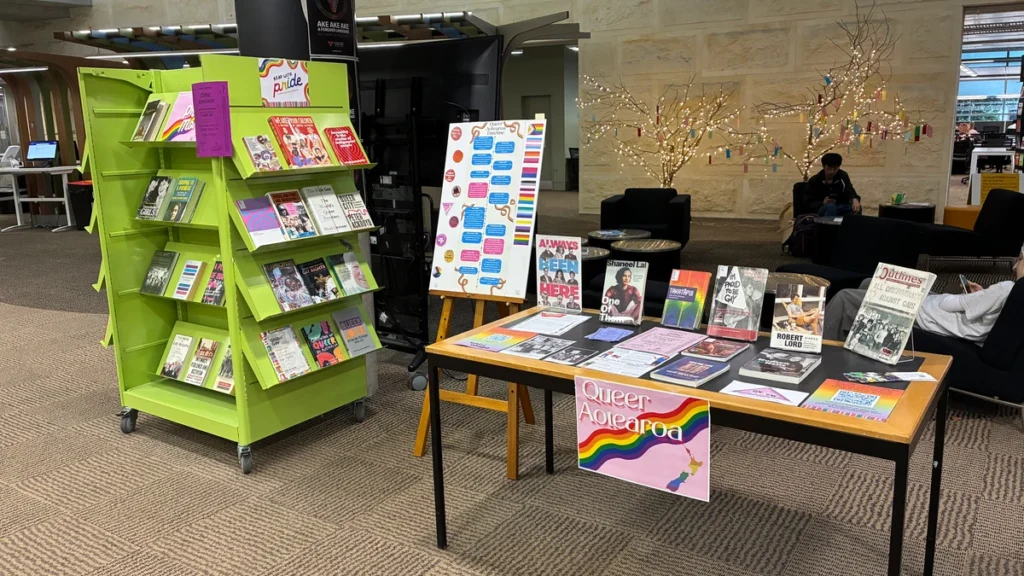
The stakes are not only cultural. In several countries, new laws restrict how LGBTQ+ themes can be taught or displayed, and some of the year’s most celebrated titles are simultaneously bestsellers in one place and pulled from shelves in another. That contradiction is part of why authors and publishers describe the current wave as a golden age and a fight at the same time. Libraries and independent bookshops have quietly become front lines, hosting the displays and reading groups that keep these books in readers’ hands when institutions waver. For many writers, simply publishing an honest, joyful story about a queer life has become a form of quiet activism, whatever the plot happens to be on the page.
Where to Start: A 2026 Queer Reading List
If you are building a reading list, the awards are a reliable map: start with a Lambda winner in whichever genre you already love, whether that is Milo Todd’s The Lilac People for historical fiction or Jennifer Finney Boylan’s Cleavage for memoir. Pair a literary heavyweight like Douglas Stuart or Rasheed Newson with something lighter, such as an Alexis Hall romance, so your stack has range. From there, follow the trails that publishers and outlets lay down: seasonal round-ups from Electric Literature and others are packed with real recommendations, and a local LGBTQ+ bookshop or online book club will point you to the titles that never make the big lists. The best thing about queer literature in 2026 is that there is finally too much of it to read in a year, and that is a wonderful problem to have.
About The Author