
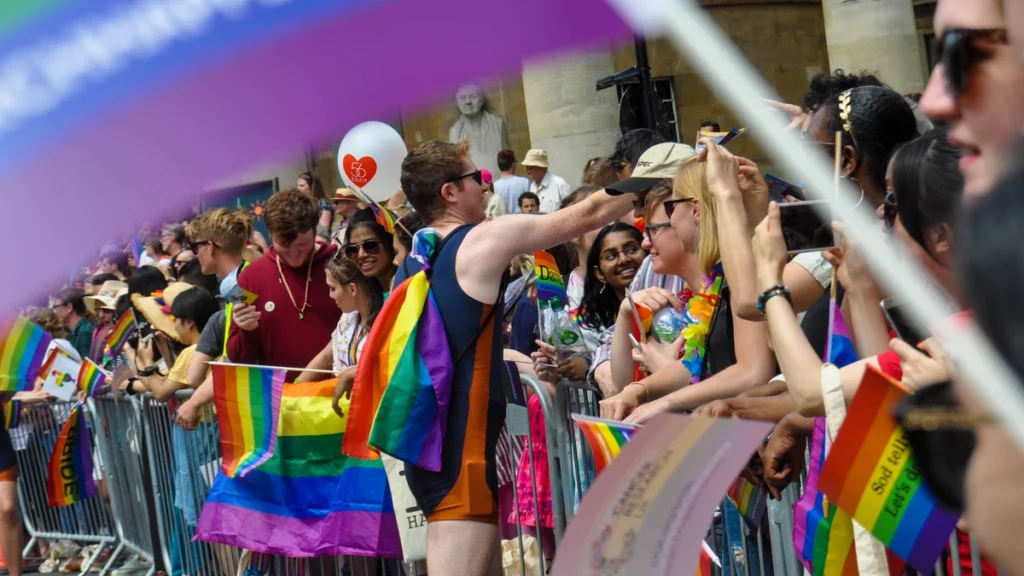
Marchers and supporters wave rainbow flags at a Pride parade.
The global picture for LGBTQ+ rights in 2026 is one of sharp contrasts. In some countries, queer people are marrying, marching and building families with full legal protection; in others, simply existing openly can mean prison or worse. Drawing on data from ILGA World, the international federation that tracks these laws, here is a snapshot of where things stand, the recent setbacks, and the signs of progress.
Where It Is Still Criminalised
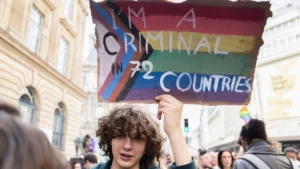
According to ILGA World’s June 2026 data, 65 United Nations member states still criminalise consensual same-sex relations, whether in law or in practice. The penalties range from fines to lengthy prison terms and, in a small number of jurisdictions, the death penalty. Many of these laws are colonial-era inheritances that independent nations never repealed, and campaigners have spent decades working through courts and parliaments to overturn them. ILGA maintains a public database of these provisions country by country.
A Worrying Turn
For the first time in almost a decade, the number of countries criminalising same-sex relations rose in the past year. ILGA World reported that Burkina Faso introduced such a law for the first time in its history and Trinidad and Tobago reversed an earlier decriminalisation ruling. In June 2026 Niger adopted an anti-gay law, following neighbours Mali and Burkina Faso, and Senegal tightened its existing provisions. These reversals are a reminder that rights, once won, are not permanent, and that the direction of travel is not the same everywhere.
Signs of Progress
Yet the same period brought real advances. Saint Lucia decriminalised consensual same-sex sexual acts, the Dominican Republic did so for its armed forces, and Botswana finally removed the last colonial-era provisions criminalising same-sex intimacy, more than six years after its courts first struck them down. On the marriage front, Thailand’s 2025 legalisation extended marriage equality to a 38th country and the first in Southeast Asia. Progress is uneven and hard-won, but it is real.
Why the Map Matters
Behind every line on ILGA’s rainbow map is a lived reality: whether a couple can hold hands in public, whether a trans person can access healthcare, whether an activist can organise without fear of arrest. The data also shapes practical decisions, from where LGBTQ+ travellers feel safe to which countries asylum seekers must flee. Tracking LGBTQ+ rights year on year is not an abstract exercise; it is how the global community holds governments accountable and directs support where it is needed most. In a year of both breakthroughs and backlash, the map is essential reading. For a movement that has always advanced through visibility and organising, keeping LGBTQ+ rights on the agenda, in every country and not only the friendly ones, remains the work, and the reason a snapshot like this is worth taking every year.
About The Author