
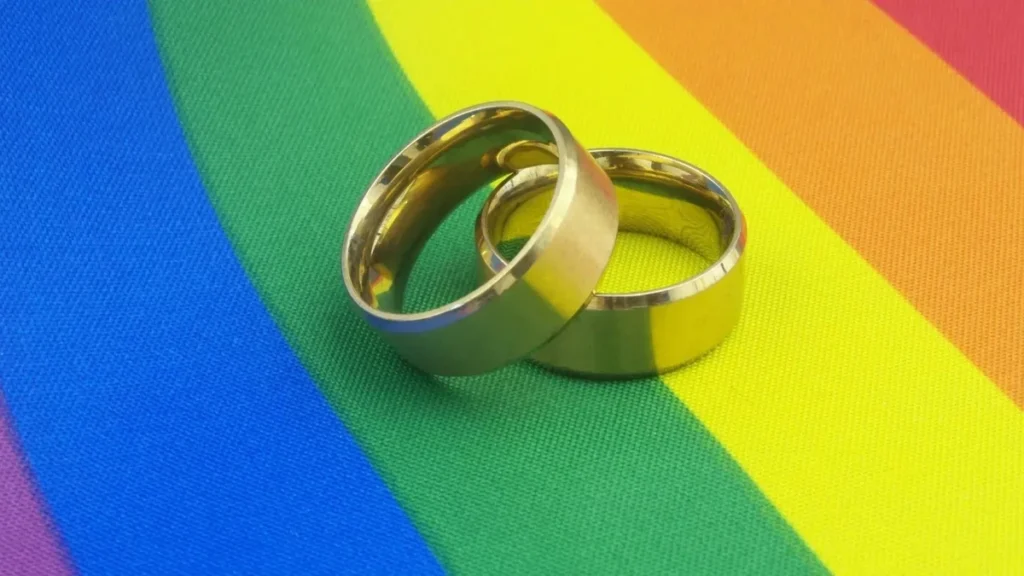
Ron Bookbinder and James Fisher have been together for 38 years and married since 2014, the year same-sex marriage became legal in Virginia. Their marriage is recognised in Virginia and across the country. Yet the Constitution of Virginia still contains a ban on marriages like theirs, and on 3 November voters across the state will decide whether to remove it. Question 2 is the ballot measure that would do it, and early voting is already under way.
For the community in Virginia, and for queer couples watching from elsewhere, the vote is about more than tidying up old text. Here is what Question 2 says, what a yes or a no would change, and the arguments both sides are making in the final weeks.
The Words on Virginia’s Ballot
The question voters will see, as published by the Virginia Department of Elections, reads: “Should the Constitution of Virginia be amended to (i) remove the ban on same-sex marriage; (ii) affirm that two adults may marry regardless of sex, gender, or race; and (iii) require all legally valid marriages to be treated equally under the law?”
It is one of three proposed constitutional amendments on this year’s ballot. Question 1 concerns reproductive healthcare, and Question 3 concerns the right to vote, including the automatic restoration of voting rights after release from incarceration for a felony. Each is a separate yes or no decision.
The language of Question 2 does three things at once. It deletes the 2006 amendment that defines marriage as the union of one man and one woman, writes in a positive statement that two adults may marry regardless of sex, gender or race, and requires the state to treat every legally valid marriage equally.
Why a Ban No Court Enforces Is Still on the Books
Virginia voters approved the Marshall-Newman Amendment in 2006, writing a ban on same-sex marriage into the state constitution. Eight years later the federal courts struck it down. A federal appeals court ruling in Bostic v. Schaefer found the ban unconstitutional, and same-sex couples have been able to marry in Virginia since 6 October 2014, as the Washington Blade recorded. The following year the US Supreme Court’s Obergefell v. Hodges decision made marriage equality the law across the country.
Court rulings, however, do not rewrite constitutions. The 2006 text stayed where it was, unenforceable but intact. Amending the Constitution of Virginia is deliberately slow: the General Assembly has to pass the same amendment in two separate sessions, with an election in between, before it can go to the people.
That is what happened here. According to VPM, lawmakers approved the language for all three amendments in 2025, and the newly elected legislature approved it again in 2026, which sent the text automatically to voters this autumn.
What a Yes Vote and a No Vote Would Mean
A yes vote strikes the 2006 language and adds the new guarantee that Virginia will recognise marriage between two adults regardless of sex, gender or race. Marriages that already exist would carry on exactly as they are.
A no vote leaves the constitution as it stands. Same-sex couples would remain able to marry, because federal law protects that right through Obergefell. But VPM sets out the scenario that worries supporters: if the Supreme Court were ever to overturn Obergefell, the law would revert to state-level definitions of marriage, and in Virginia the 2006 ban would still be sitting in the constitution.
That is why campaigners describe the amendment as insurance rather than a new right. “This amendment is really a proactive measure,” Narissa Rahaman, executive director of Equality Virginia, told WSET. Her organisation’s message for the final weeks is simple. “With early voting now underway, our focus is making sure every Virginian knows Question 2 is on their ballot,” she told the Blade.
The Case for Question 2
Supporters argue that a state constitution should describe the families who actually live under it. Writing in Cardinal News, Joe Cobb, the mayor of Roanoke and a United Methodist minister who married his husband James in 2017, made the case from his own life. He described couples telling him they are rushing to marry because they are afraid of what might change, and explained that he and his husband went to California for surrogacy because of uncertainty over whether Virginia would recognise both of them as legal parents.
“Voting ‘yes’ on Question 2 will ensure our constitution reflects the lives of families like mine,” he wrote.
Bookbinder and Fisher, the Arlington couple, see it the same way. Fisher told the Blade the referendum is “a critical vote to remove this discriminatory language from the constitution.” For Bookbinder, the change in 2014 was personal before it was political: he described how good it felt to say “my husband” rather than “my partner” for the first time. John Fishwick, a former US attorney, told WSET that he reads the amendment as limited to marriage and essentially an affirmation of what is already the law of the land.
The Case Against, and the Argument Over One Word
Opponents have focused much of their argument on a single word in the new text: gender. In the same Cardinal News feature, Phill Kline, a former attorney general of Kansas who now teaches law in Virginia, argued that the federal rulings and the Respect for Marriage Act use the word “sex”, while Question 2 adds “gender”, a term he said is undefined and could be cited in disputes far beyond marriage, from employment to school records and custody orders.
“Question 2 would do in Richmond what the court would not do in Washington,” he wrote, arguing that if voters want to protect same-sex marriage the amendment should use the courts’ own wording instead. Jonathan Falwell, pastor of Thomas Road Baptist Church, raised similar concerns to WSET, saying the text would separate the ideas of sex and gender in the constitution and could reach into questions about sports and bathrooms.
Supporters reject that reading, pointing out that the amendment’s subject is marriage and that the protection of sex, gender and race appears in the context of who may marry and how marriages are treated. Voters will have to weigh both interpretations, and that one word has become one of the clearest dividing lines of the campaign.
Couples Who Have Waited Since 2014
For many queer Virginians the vote carries a weight that legal analysis does not capture. Couples who queued at courthouses in 2014, families built through adoption and surrogacy, and young people growing up in a state whose founding document still describes their future relationships as forbidden all have a stake in the outcome.
Bookbinder told the Blade that he believes the actions of the Trump administration have hurt many groups, including LGBTQ people and trans people especially. Fisher was more hopeful about public opinion, saying people have seen since the Supreme Court decision that a same-sex marriage is just a marriage. Both views explain why campaigners are treating the referendum as a chance to make that settled reality permanent at state level.
The vote is also part of a wider conversation about how rights are written down rather than assumed. In the UK this autumn, that conversation has played out over trans guidance, where the Lib Dems became the first big party to reject the EHRC’s trans guidance. In Virginia it comes down to a single ballot line.
What Happens After 3 November
If Question 2 passes, the 2006 ban will be removed from the Constitution of Virginia and replaced with the new guarantee. If it fails, nothing changes immediately: marriages remain legal and recognised under federal law, and the old text stays in place as it has since 2014.
Either way, the result will be read well beyond the state. Virginia’s Question 2 is a test of whether voters are ready to put marriage equality into their own constitution, rather than relying on the courts to protect it. Early voting is open now, and polling day is Tuesday 3 November.
About The Author