
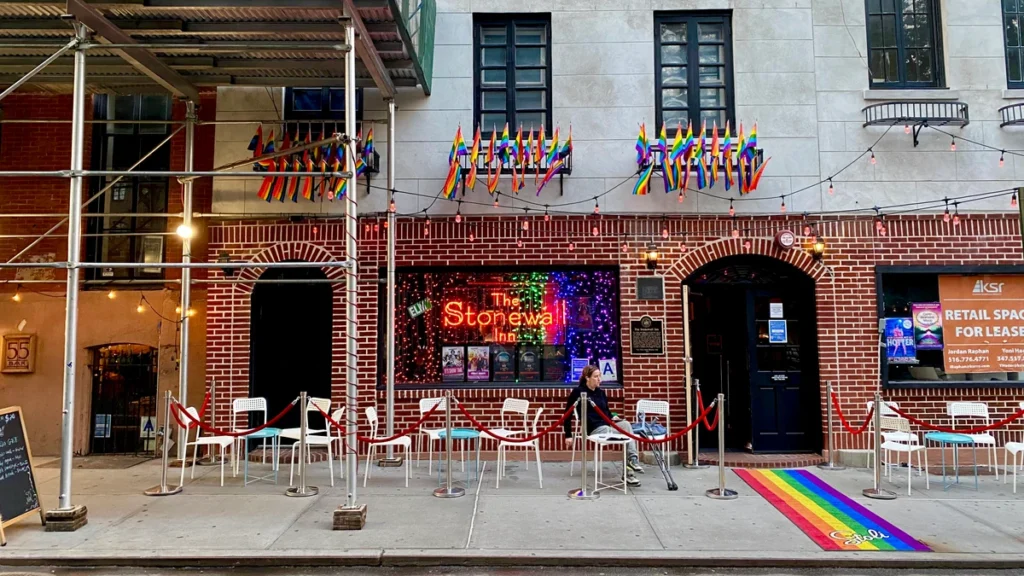
The Stonewall Inn in New York, birthplace of the modern Pride movement.
Every summer, millions dance at Pride. Fewer remember that it began not as a party but as a rebellion. Before the floats and the headliners, there was a police raid, a crowd that refused to run, and a movement that changed the world. Understanding Pride as protest is the key to understanding why, more than half a century on, it still matters.
It Started at Stonewall
In the early hours of 28 June 1969, police raided the Stonewall Inn, a mafia-run gay bar in New York’s Greenwich Village. Raids on queer bars were routine and humiliating, but that night the patrons and the neighbourhood fought back, and the resistance spilled into days of clashes on Christopher Street. Trans women of colour and drag queens, among them Marsha P. Johnson and Sylvia Rivera, were at the heart of the uprising. Stonewall did not invent the gay-rights movement, but it electrified it, and the site is now a US national monument.
The First Marches
Pride as we know it began on the first anniversary. On 28 June 1970, activists held Christopher Street Liberation Day in New York, alongside marches in Los Angeles and Chicago, the first Pride parades in history. They were not corporate-sponsored celebrations but political demonstrations, demanding an end to discrimination and the criminalisation of queer life. The movement that grew from Stonewall spread across the world, and within a few decades Pride marches were being held on every continent.
From Protest to Parade
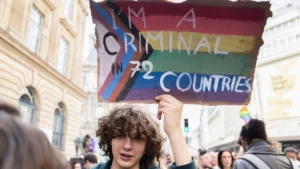
Over fifty years, Pride grew from a defiant march into a season of festivals watched by millions, complete with corporate floats and pop headliners. That growth is a sign of hard-won acceptance, and it has funded vital community work, but it has also sparked an ongoing debate within the community: has Pride become too commercial, too sanitised, too far from its radical roots? Many cities now hold separate, explicitly political events, from Trans Pride marches to protest-focused alternatives, precisely to keep the spirit of Pride as protest alive alongside the big stages.
Why Pride Is Still Political
The debate matters because the fight is not over. As the global picture for LGBTQ+ rights shows, dozens of countries still criminalise queer life, and even in nations with strong legal protections, rights are being contested and rolled back. That is why, whatever the headliners, Pride remains a protest at heart: a public, joyful, unmissable insistence that queer people exist, belong and will not be pushed back into the shadows. Knowing that history, and keeping the idea of Pride as protest alive, is what turns a day out into an act of solidarity.
About The Author